



Clicky

Performance Management Archives - Ideas for Leaders

How Time Scarcity Undermines Performance and What Leaders Must Change

The modern experience of time is defined by a paradox: despite living in an era of unprecedented material wealth, we are increasingly time-poor. By 2018, 80% of employed Americans reported a persistent lack of time, up from 70% in 2011. This sense of urgency is driven by complex societal, institutional, and psychological factors. Societally, the […]

Read More… from How Time Scarcity Undermines Performance and What Leaders Must Change

The Transparency Paradox: How Open Plan Offices Shut Down Interaction

For decades, the prevailing trend in corporate architecture has been a ‘war on walls’, characterised by the removal of cubicles and private offices in favour of open, ‘unbounded’ workspaces. The primary motivation for this shift is the belief that removing physical barriers will foster greater collaboration, increase face-to-face (F2F) interaction, and boost the ‘collective intelligence’ […]

Read More… from The Transparency Paradox: How Open Plan Offices Shut Down Interaction

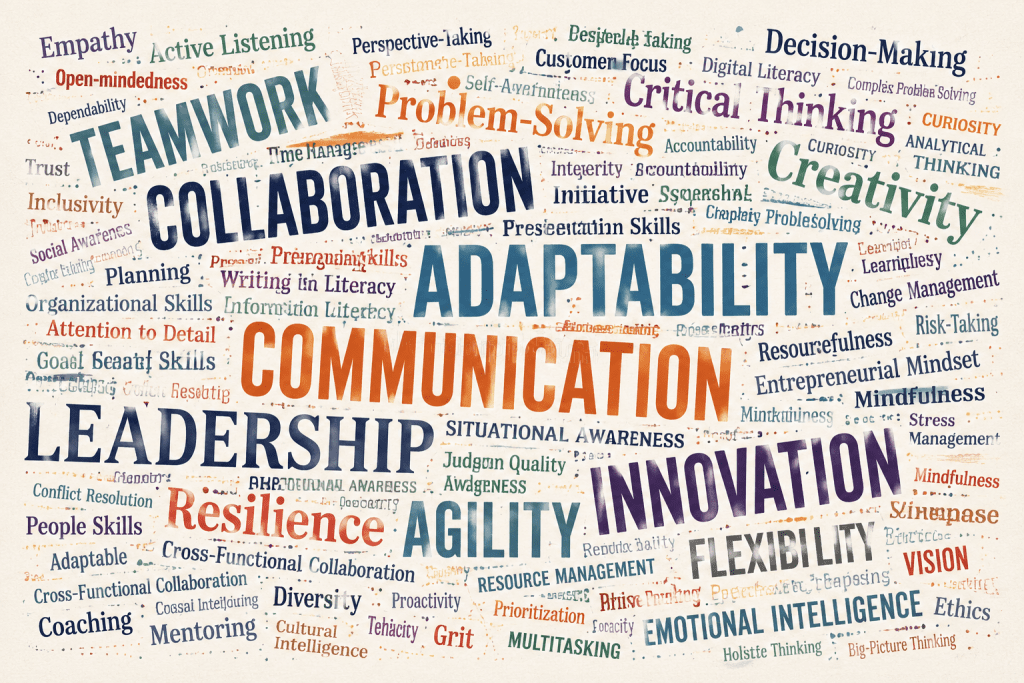
Cutting Through the Skills Chaos: Why HR Must Stop Chasing Buzzwords

The shift toward a knowledge-based economy has changed what employers value most: instead of technical qualifications that may become obsolete, organizations now seek adaptive and transferable non-technical skills. Despite their popularity, there is no global consensus on how to define or measure these abilities. Instead, the sheer volume of research on these skills has created […]

Read More… from Cutting Through the Skills Chaos: Why HR Must Stop Chasing Buzzwords

The Long Shadow of Star Mentors: Why Expectations Stick for Years

A study from the University of Exeter and University College London investigates the long-term career consequences for individuals who have benefited from connections to exceptionally high-performing industry stars. While prior studies acknowledge that connections to high-status individuals help in getting hired, this study examines whether the advantages or disadvantages of this reflected glory persist in […]

Read More… from The Long Shadow of Star Mentors: Why Expectations Stick for Years

The Hidden Costs of Expanding a Leader’s Span of Supervision

Contemporary management trends often advocate for flatter organizational hierarchies, an approach characterized by a significant increase in the number of individuals reporting to a single leader, commonly referred to as the “span of supervision.” While broader spans can offer organizational benefits, such as fostering employee autonomy and improving cost-effectiveness, they simultaneously raise concerns regarding reduced […]

Read More… from The Hidden Costs of Expanding a Leader’s Span of Supervision

The Fix for Quiet Quitting: Why Restoring Agency Is Your Only Option.

Periods of heightened stress and uncertainty, such as political turmoil, economic instability, and global crises, tend to erode individuals’ general perceived control, defined as the belief that success at work is in their hands. Perceived control depends on the locus of control (whether outcomes are determined by internal or external factors) and self-efficacy (the belief […]

Read More… from The Fix for Quiet Quitting: Why Restoring Agency Is Your Only Option.

Vacations More Beneficial for Employee Well-Being Than We Thought

A study conducted by researchers from the University of Georgia and Auburn University provides a better understanding of how vacations affect employee well-being. Despite the need for time off to recuperate from increasing job demands, vacation usage is declining particularly in the United States where billions of vacation days go unused annually. The study highlights […]

Read More… from Vacations More Beneficial for Employee Well-Being Than We Thought

Performance Management Across Cultures: How Multinationals Can Meet the Challenge

A study by a team of Australian and Turkish academics focuses on one of the major cross-cultural challenges of multinational corporations (MNCs): developing a performance management system that can be accepted by employees from different countries with different cultural norms. Performance management (PM) systems, developed by HR to measure and ensure high employee performance, typically […]

Read More… from Performance Management Across Cultures: How Multinationals Can Meet the Challenge

How Personal-Organizational Values Mismatch Sets the Stage for Workplace Procrastination

An employee’s tendency to procrastinate can arise from personal issues as varied as lack of self-discipline, sleep deprivation, and anxiety, anger, or other negative emotions. Procrastination can also result from workplace pressures, such as tasks that are not clearly defined, self-serving decisions by the organization that ignores the interests of employees, or work-family conflict. A […]

Read More… from How Personal-Organizational Values Mismatch Sets the Stage for Workplace Procrastination